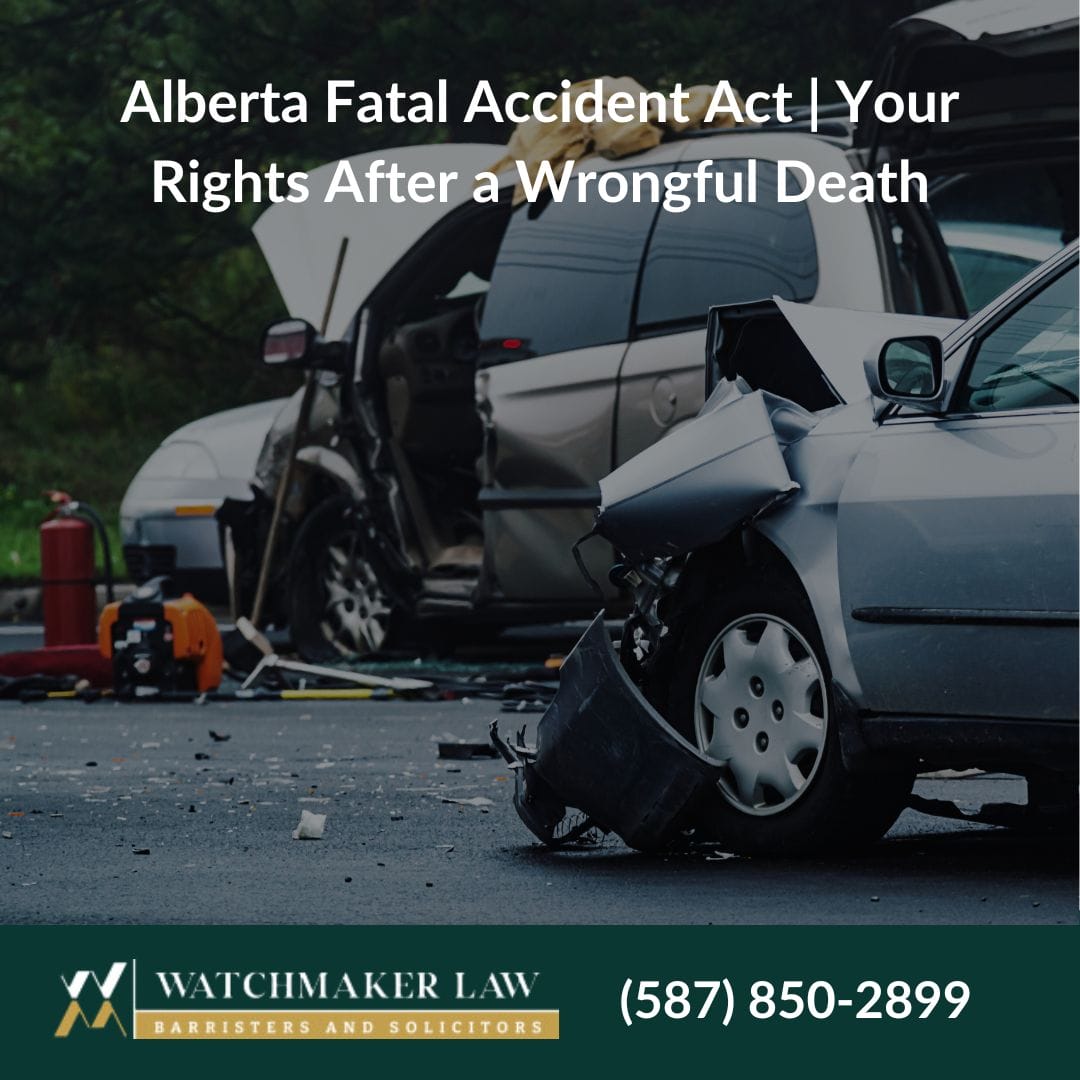
Losing a loved one can be devastating, and it is no less so when it is a wrongful death. The Alberta Fatal Accidents Act (FAA) provides a legal framework for surviving family members to seek compensation when a death is caused by another’s wrongful act, neglect, or default. This document outlines who is entitled to make a claim, the nature of recoverable damages, and the procedures involved in pursuing such claims under the Act.
This analysis will cover who is entitled to claim under the Fatal Accident Act, against whom the claim can be made, and what compensation is entitled under the Act.
Overview of the Fatal Accident Act
The Alberta Fatal Accident Act was enacted with a clear purpose-to ensure that loved ones of a deceased, whose death is caused by a wrongful act, neglect or default of another, can seek redress. This act empowers the affected parties to hold the at-fault party accountable and get compensation for their loss.
The Act allows for a claim for damages against a negligent person or liable individual who caused the death through their negligent act or omission. If the negligent act would have entitled the deceased to pursue a legal claim and recover damages had they survived, then the responsible individual or entity remains liable for damages, even after the deceased’s death. In other words, it permits a claim for damages against a person whose negligent act or omission caused the death of another, where the deceased would have been entitled to pursue legal action and recover damages had they survived.
Who is entitled to make a claim under the Act?
The claim under the Act is to the benefit of:
• Spouse;
• Adult interdependent partner;
• Parent;
• Child (biological and adopted);
• Brother or sister of the deceased person;
The compensation claim can be made in the name of the executor or administrator of the deceased person who acts for the benefit of the spouse, adult interdependent partner, parent, child, brother or sister of the deceased person whose death is caused in a fatal accident because of the negligent act of the liable party. Only the executor or administrator of the deceased person can bring the action for compensation within the year of the death of the deceased.
However, in a case where there is no administrator or executor, or the administrator or executor fails to bring the action for compensation within the year of the death of the deceased person, the beneficiaries i.e. spouse, adult interdependent partner, parent, child, brother or sister of the deceased person may bring the action after a year of the death of the deceased person injured in the fatal accident.
It must be noted that only one action for compensation can be brought in respect of the fatal accident that caused the death of the deceased person. In other words, where there are multiple beneficiaries, they must all bring a joint action for the compensation.
What Expenses can be recovered under the Fatal Accident Act?
The following expenses can be recovered under the Fatal Accident Act by the beneficiaries whose benefits the claim is brought:
- Care expenses of the deceased person incurred from the time of injury and death;
- Travel and accommodation expenses for visiting the deceased from the time of the injury and death;
- Funeral expenses and all connected supplies and services;
- Grief counselling fees to the benefit of the spouse, adult interdependent partner, parent, child, brother or sister of the deceased person.
Bereavement Damages
Aside from the other damages claimed in an action brought under the Fatal Accident Act, the court can also award bereavement damages for grief, loss of care, guardianship and companionship of the deceased person. It must be noted that this may be granted without proof of the emotional damage caused by the fatal accident. A breakdown of the bereavement damages awarded is as follows:
• $82 000 to the spouse or adult interdependent partner of the deceased person,
• $82 000 total to the parent or parents of the deceased person to be divided equally if the action is brought for the benefit of both parents, and
• $49 000 to each deceased person’s children.
It’s important to note that for a spouse or adult interdependent partner of the deceased person to be eligible for bereavement damages, they must have been living with the deceased at the time of death.
What happens when the person whose act causes the deceased’s death is dead?
Where the person who would have been liable for the wrongful act or negligent act that led to the death of the deceased is also dead, the action for compensation can be brought against their executor or administrator.
The Fatal Accidents Act ensures that families affected by wrongful death are not left without recourse. By clearly defining who can claim, what can be recovered, and how to proceed—even in complex cases involving deceased wrongdoers—the Act provides a path to redress and financial relief for grieving families.
Losing a loved one can be a harrowing and traumatic experience, and navigating the complexity of the legal system during this time can make it more overwhelming. Therefore, hiring a lawyer knowledgeable about the Fatal Accident Act in Alberta can offer essential support and guidance to protect your rights.
Our lawyers provide client-focused and empathetic services to our clients as they navigate loss and overwhelming circumstances.
We are available 24/7 to review the facts of your specific case and provide information to you on the options available, including assistance with the Fatal Accident Act.
We can be reached at 825-203-9801 or chat live with a member of our legal team now on our home page.”